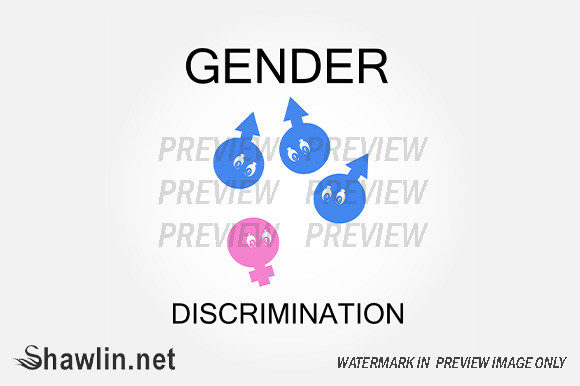
Breaking the Cycle: Understanding and Addressing Gender Discrimination Against Girls
Gender discrimination remains one of the most persistent barriers to human progress, yet its manifestations are shifting in subtle, often overlooked ways. While legal frameworks have advanced significantly over the last few decades, the cultural and interpersonal dynamics that fuel inequality continue to evolve. At the heart of this issue is a specific, damaging dynamic: the systemic and social gender discrimination where girls are marginalized, silenced, or undervalued by boys and men. This is not merely a historical artifact; it is a living reality that shapes classrooms, workplaces, and creative industries today.
To understand why this topic demands our immediate attention, we must look beyond statistics and examine the daily interactions that reinforce these power imbalances. For professionals, educators, and creators, recognizing these patterns is the first step toward building more equitable environments. The conversation has moved from simply acknowledging that discrimination exists to understanding how it operates in modern workflows and social structures.
The Evolution of Bias in Modern Contexts
Historically, gender discrimination was often overt, codified in laws that explicitly denied women rights to property, voting, or education. Today, the landscape is different but no less challenging. The bias has become more insidious, embedded in unconscious behaviors and micro-interactions. When we discuss a girl being discriminated against by boys, we are often talking about a spectrum of behaviors ranging from interrupting speech in meetings to excluding female peers from collaborative projects or technical roles.
In the digital age, these dynamics have found new arenas. Online gaming communities, tech forums, and social media platforms can become hostile grounds where young women and girls face harassment or dismissal solely based on their gender. This shift reflects a broader trend where technology amplifies existing societal biases rather than eliminating them. For marketers and business owners, this means that brand messaging and community management must be acutely aware of these undercurrents. Ignoring them risks alienating a significant portion of the audience and damaging brand reputation.
Furthermore, the nature of work itself has changed. With the rise of remote work and gig economies, traditional HR safeguards are sometimes less visible. In freelance marketplaces or decentralized teams, a girl or woman might find her proposals ignored or her rates undercut compared to male counterparts. This "gig gap" is a direct extension of the playground dynamic where boys dominate space and resources, now translated into the economic sphere.
Recognizing the Signs in Professional and Creative Spaces
Identifying discrimination requires a keen eye for detail. It is rarely a single event but rather a pattern of exclusion. Consider the following scenarios that professionals and educators frequently encounter:
- Ideas being co-opted: A female team member suggests an idea that is ignored, only for a male colleague to repeat it minutes later and receive praise.
- Task stereotyping: In group projects, girls are consistently assigned note-taking or organizational roles, while boys take on leadership or technical tasks.
- Tone policing: Women and girls are often described as "aggressive" or "emotional" when displaying the same assertiveness that is labeled "confident" in men.
- Access to mentorship: Informal networking often happens in male-dominated spaces, leaving girls and young women without access to crucial career guidance.
These behaviors are not just hurtful; they are economically and creatively inefficient. When half the population is discouraged from contributing fully, organizations lose out on diverse perspectives and innovation. For entrepreneurs and business leaders, addressing this is not just a moral imperative but a strategic necessity.
Practical Implications for Creators and Educators
For those in creative fields, the impact of gender discrimination is particularly profound. Visual storytelling, design, and content creation shape how society perceives gender roles. When girls are discriminated against by boys in educational settings—such as being steered away from STEM subjects or artistic leadership—it limits the pool of future talent. This creates a feedback loop where the lack of female representation in certain fields is used to justify further exclusion.
Educators play a pivotal role in breaking this cycle. It involves more than just enforcing rules; it requires actively cultivating an environment where every voice is valued. This might mean restructuring group work to ensure rotating leadership roles or implementing blind grading systems to reduce unconscious bias. For parents and mentors, it means encouraging girls to speak up and teaching boys the value of listening and collaboration.
In the corporate world, the implications are equally significant. Companies that fail to address internal cultures of discrimination face higher turnover rates and lower employee engagement. Conversely, organizations that proactively foster inclusivity see better problem-solving capabilities and stronger team cohesion. This is where policy meets practice. Having a diversity statement is insufficient if the daily interactions within the office contradict it.
Strategies for Building Equitable Environments
Creating change requires intentional action. Here are practical steps that individuals and organizations can take to mitigate gender discrimination:
- Implement Structured Feedback: Move away from vague performance reviews. Use data-driven metrics to evaluate contributions, ensuring that credit is given accurately regardless of gender.
- Promote Active Allyship: Encourage men and boys to be active allies. This involves speaking up when they witness discriminatory behavior and using their privilege to amplify female voices.
- Rethink Recruitment and Hiring: Audit job descriptions for gendered language and utilize diverse hiring panels to reduce bias in the selection process.
- Facilitate Open Dialogue: Create safe spaces for employees and students to discuss their experiences without fear of retribution. Listening is often the most powerful tool for change.
- Invest in Training: Provide regular training on unconscious bias and inclusive leadership for all levels of the organization.
It is also crucial to recognize the intersectionality of these issues. Gender discrimination does not happen in a vacuum; it intersects with race, socioeconomic status, and ability. A holistic approach considers these overlapping identities to ensure that solutions are effective for everyone.
The Role of Visual Media and Representation
As we navigate these complex social dynamics, the tools we use to communicate matter immensely. Visual media plays a critical role in shaping perceptions. High-quality illustrations and vector graphics that depict diverse, empowered scenarios can help normalize equality. For instance, using imagery that shows girls leading teams, engaging in technical work, or collaborating equally with boys sends a powerful message.
Creators and marketers should seek out resources that reflect these values. Whether it is a vector EPS file compatible with older software for broad accessibility or a high-resolution JPG for modern digital campaigns, the content of the image is as important as its format. Authentic representation helps dismantle stereotypes by providing visible proof of capability and leadership across genders. When selecting assets for websites, presentations, or educational materials, prioritize those that avoid clichés and instead showcase genuine partnership and mutual respect.
Moreover, the availability of customizable resources allows businesses and educators to tailor messages to their specific audiences. Being able to adapt an illustration to fit a particular context ensures that the visual narrative aligns with the organization's commitment to inclusivity. This attention to detail signals to stakeholders that the commitment to equality is deep-seated and thoughtful.
Looking Ahead: A Realistic Path Forward
The journey toward eliminating gender discrimination is ongoing. While we have made strides, the emergence of new technologies and shifting social norms presents both opportunities and challenges. Artificial intelligence, for example, holds the potential to reduce human bias in hiring but also risks perpetuating it if trained on skewed data sets. Staying vigilant and adaptable is key.
For the average reader, professional, or parent, the path forward involves consistent, small actions. It is about correcting a colleague who interrupts, mentoring a young girl interested in coding, or choosing media that portrays balanced gender dynamics. It is about recognizing that gender discrimination is not a "women's issue" but a societal one that affects us all.
Ultimately, fostering an environment where girls are not discriminated against by boys—and where adults do not discriminate against women—is about unlocking human potential. It creates a world where merit, creativity, and character define success, not gender. By integrating these principles into our daily lives, workflows, and creative practices, we contribute to a future that is not only fairer but also more innovative and resilient.
Change begins with awareness and is sustained through action. Whether you are designing a campaign, managing a team, or raising a child, your choices matter. Let us commit to building spaces where everyone can thrive, free from the constraints of outdated biases. The tools, knowledge, and strategies are available; the next step is implementation.