Evaluating Abstract Happy World Environment Day Design Assets
In the digital landscape, visual communication plays a pivotal role in raising awareness for global causes. Abstract Happy World Environment Day represents a specific category of graphic design resources tailored to celebrate June 5th, the date designated by the United Nations for observing World Environment Day. These assets typically feature stylized, non-literal interpretations of nature, utilizing geometric shapes, vibrant color palettes, and modern vector illustrations to convey themes of sustainability, ecological balance, and planetary care. For organizations, marketers, and content creators, selecting the right visual framework is a strategic decision that impacts audience engagement and message clarity.
Understanding the Concept and Utility
The core concept behind an Abstract Happy World Environment Day design lies in its ability to translate complex environmental issues into accessible, visually appealing content. Unlike photorealistic imagery, which can sometimes feel heavy or documentary-style, abstract designs often employ a "Green Eco Earth" motif rendered through clean lines and optimistic colors. This approach aligns well with social media algorithms that favor bright, engaging, and easily digestible visuals.
These design packages are not merely static images; they are comprehensive toolkits. A standard high-quality package includes a World Environment Day vector illustration set against a versatile World Environment Day background. The utility of these files extends beyond simple posting. They serve as the foundation for a World Environment Day card, a campaign banner, or an educational infographic. The inclusion of multiple file formats—specifically PSD, AI, EPS, and PDF—ensures compatibility across various software ecosystems, from Adobe Photoshop for raster editing to Adobe Illustrator for vector manipulation.
Key Features and Technical Specifications
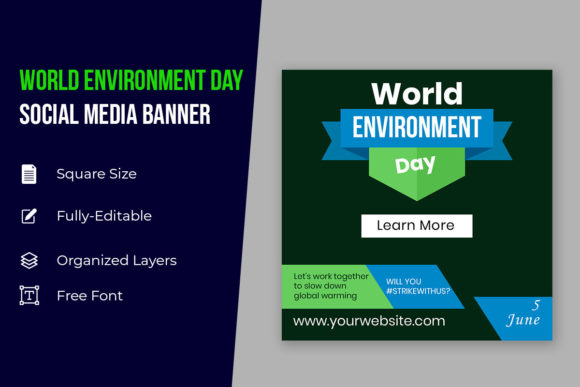
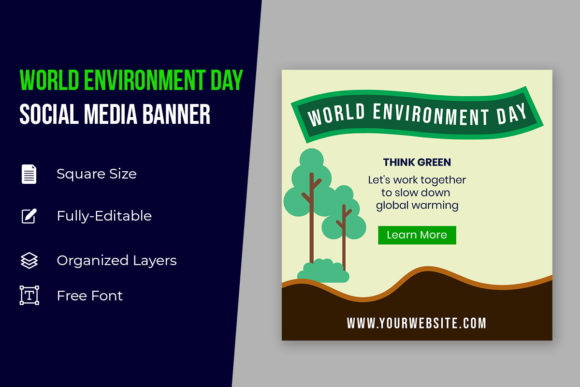
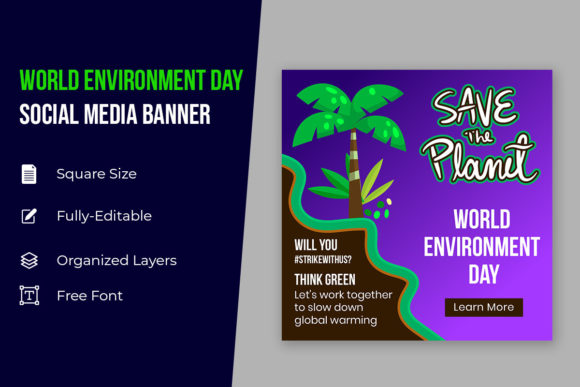
When evaluating a design asset for professional use, technical specifications are paramount. A robust Abstract Happy World Environment Day template should offer precision and flexibility. The industry standard for social media optimization is a square format, typically 1080×1080 Pixels. This dimension ensures crisp display on platforms like Instagram, Facebook, and LinkedIn without requiring cropping that might compromise the composition.
The resolution is another critical factor. Designs intended for digital screens should be created at 72 DPI in the RGB color mode. This configuration guarantees that colors appear vibrant on monitors and mobile devices. Furthermore, the structural integrity of the file determines its ease of use. High-quality templates feature 100 Layered structures where every element is separated. This allows users to toggle visibility, rearrange components, or isolate specific graphics without affecting the rest of the design.
A distinguishing feature of premium assets is the use of Smart Objects. This functionality enables easy customizable editable workflows. Users can replace placeholder images or modify text fields while maintaining the original effects, such as drop shadows, glows, or distortions. This saves significant time compared to rebuilding effects from scratch. Additionally, the inclusion of an Information File and a Help File provides necessary guidance on font usage, licensing terms, and installation procedures, reducing the learning curve for new users.
Benefits of Using Abstract Vector Illustrations
There are several compelling reasons to choose an abstract vector-based approach over other visual styles for World Environment Day campaigns:
- Scalability: Vector formats like AI and EPS allow graphics to be resized infinitely without losing quality. This means a design created for a social media post can be scaled up for a large print banner or a website header without pixelation.
- Brand Consistency: Because all main elements are editable and customizable, designers can easily swap out generic greens and blues to match specific brand guidelines. This ensures that the environmental message feels integrated with the organization's identity rather than looking like a generic stock purchase.
- Positive Emotional Resonance: The "Happy" aspect of the design concept focuses on solutions and hope rather than doom and gloom. Abstract shapes and cheerful colors can make the topic of climate change feel less intimidating and more actionable for the average viewer.
- Workflow Efficiency: Having access to PSD, AI, EPS, and PDF files means the asset is ready for immediate deployment across different departments. The marketing team can use the PSD for social posts, while the print team utilizes the EPS for brochures, all from a single purchase.
Considerations and Tradeoffs
While abstract designs offer numerous advantages, they are not the optimal solution for every scenario. It is important to weigh the tradeoffs before committing to this style.
Lack of Specificity: Abstract art, by definition, interprets reality rather than depicting it literally. If a campaign aims to highlight a specific real-world event, such as a local beach cleanup or a specific endangered species, a photorealistic image might convey the urgency and context more effectively than a geometric earth illustration.
Design Skill Requirement: Although these templates are marketed as easy customizable, fully leveraging the potential of Smart Objects and layered vectors requires a baseline proficiency in design software. Users unfamiliar with layer management or vector paths may find the abundance of options overwhelming. In such cases, a flattened JPEG or a simpler Canva-style template might be more appropriate, even if it offers less creative freedom.
Overuse of Trends: Abstract eco-designs have become popular. There is a risk that using a widely available template could result in a campaign that looks similar to competitors. To mitigate this, users must invest time in customizing colors, typography, and layout arrangements to create a unique visual signature.
Situational Fit and Decision-Making Insights
Determining whether an Abstract Happy World Environment Day asset aligns with your goals depends on your specific objectives and resources.
Strong Fit Scenarios:
- Corporate Social Responsibility (CSR) Campaigns: Large corporations often need polished, safe, and universally appealing visuals that align with brand guidelines without being too gritty or political. Abstract designs fit this need perfectly.
- Social Media Managers: For teams needing to produce high volumes of content quickly, the 1080×1080 Pixels format and pre-built layers allow for rapid iteration and scheduling.
- Educational Institutions: Schools and universities can use these friendly, colorful graphics to engage younger audiences who respond well to modern, illustrative styles.
When to Consider Alternatives:
If the primary goal is journalistic reporting, scientific documentation, or fundraising based on urgent crisis intervention, realistic photography or data-driven infographics may yield higher conversion rates. Similarly, if the organization lacks in-house design capabilities and cannot edit AI or PSD files, a fully managed design service or a drag-and-drop platform with locked templates might be a more practical choice.
Final Evaluation
The Abstract Happy World Environment Day design collection represents a versatile resource for modern digital communication. Its value lies in the balance between aesthetic appeal and technical flexibility. The inclusion of multiple file formats (PSD, AI, EPS, PDF) and features like Smart Objects empowers users to adapt the Green Eco Earth concept to diverse contexts. However, the effectiveness of these assets ultimately depends on the user's ability to customize them meaningfully. By understanding the strengths of vector abstraction and acknowledging the limitations regarding specificity, decision-makers can determine if this design approach will successfully amplify their environmental message and increase the attractiveness of their content for visitors.