Mastering Your Visual Workflow with a Social Media Ads Facebook Cover Page Template
In the fast-paced ecosystem of digital marketing, consistency is often the differentiator between a brand that fades into the background and one that commands attention. For professionals, entrepreneurs, and small business owners managing their own promotional channels, the pressure to produce high-quality visuals daily can be overwhelming. This is where a dedicated Social Media Ads Facebook Cover Page template becomes an essential asset in your operational toolkit. It is not merely a graphic file; it is a foundational element that streamlines your creative process, ensures brand coherence, and accelerates your time-to-market for campaigns.
Understanding how to integrate this resource effectively requires looking beyond the static image and viewing it as part of a broader workflow. Whether you are launching a new product, promoting a service, or simply maintaining engagement with your audience, having a reliable design structure allows you to focus on strategy and copy rather than wrestling with layout mechanics.
The Role of Design Assets in Strategic Planning
Before diving into the technical specifications, it is crucial to understand where a design template fits within your project lifecycle. In a typical marketing workflow, the planning phase involves defining the message, identifying the target audience, and selecting the platforms. The execution phase follows, where creative assets are produced. Without a standardized template, the execution phase often becomes a bottleneck. Designers or business owners spend excessive hours aligning elements, choosing fonts, and ensuring dimensions are correct for every single post.
A Social Media Ads Facebook Cover Page template eliminates this friction. By establishing a pre-approved visual framework, you move the heavy lifting of design to the preparation stage. When a new campaign idea emerges, you are not starting from a blank canvas. Instead, you are populating a proven structure. This shift allows you to deploy content faster, react to trending topics more agilely, and maintain a professional appearance even when resources are limited.
This approach is particularly valuable for freelancers and agencies managing multiple clients. It ensures that each client's distinct identity is preserved while adhering to a consistent production schedule. The template acts as a guardrail, preventing design drift and ensuring that every output meets a baseline quality standard before it ever reaches the public eye.
Technical Specifications and Compatibility
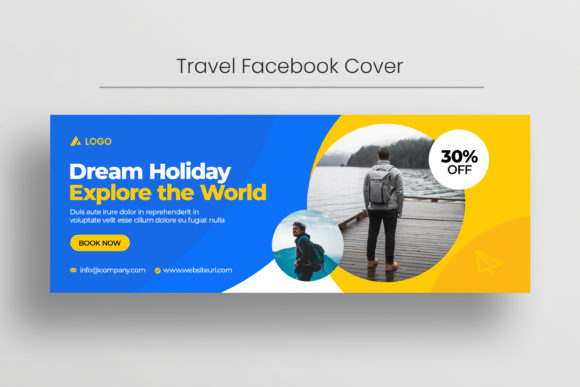
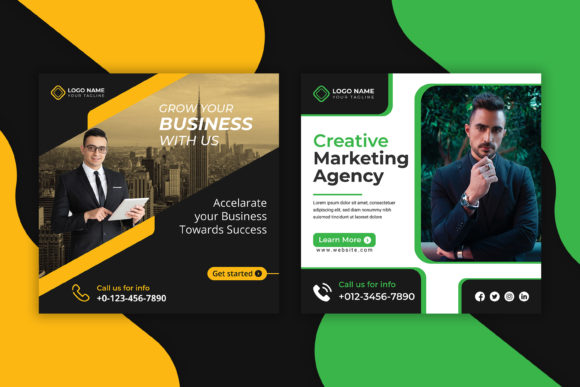
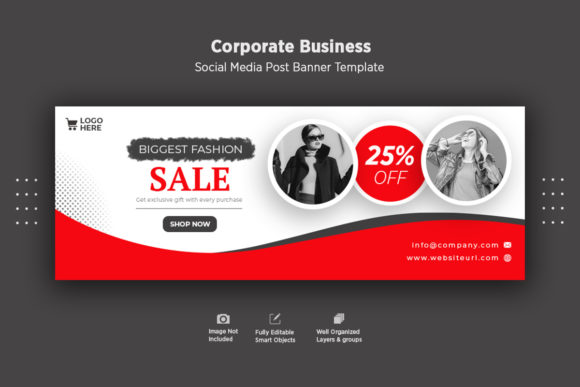
To maximize the utility of any design asset, one must understand its technical foundation. The template in question is delivered as an Adobe Photoshop PSD file, accompanied by a high-resolution JPEG preview. The dimensions are set to 1080×1080 pixels, which is the industry standard for square social media posts. This size is versatile, performing well on Facebook feeds, Instagram grids, and even LinkedIn updates.
The file is configured in RGB Color mode at 300 DPI. While screen display typically requires only 72 DPI, working at 300 DPI ensures that the graphics remain crisp and detailed, even if the asset is repurposed for print materials like flyers or brochures later in the campaign. This forward-thinking specification adds long-term value to the asset, allowing for cross-channel compatibility without the need for re-design.
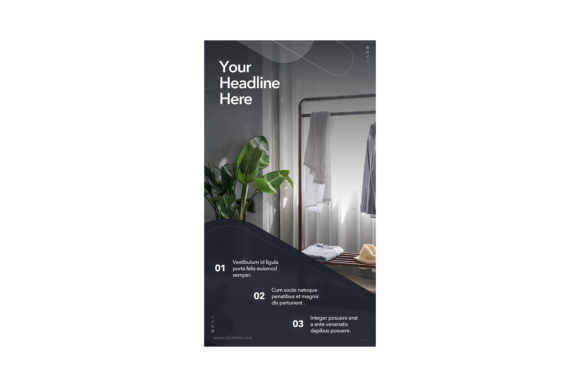
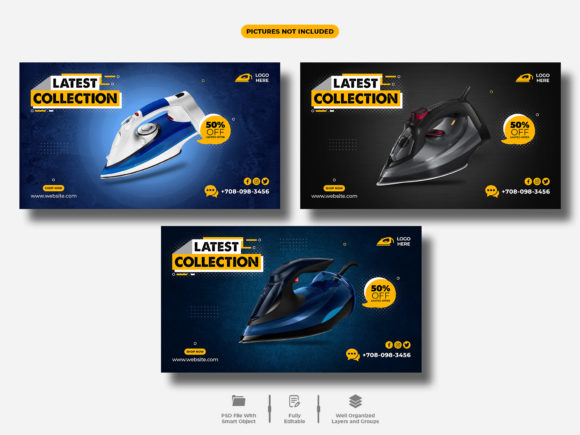
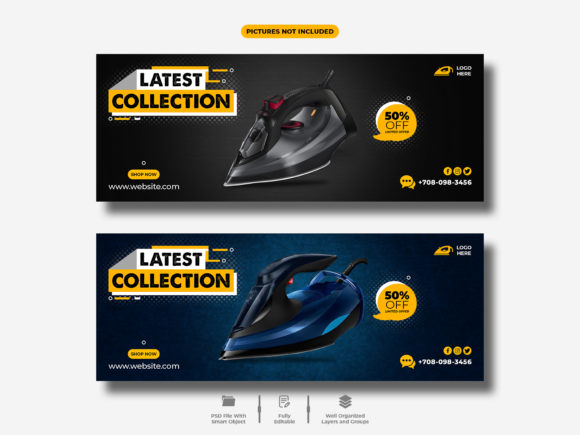
One critical detail to note is that the image is not included in the download. This is a deliberate design choice that enhances flexibility. It allows you to insert your own product photography, team headshots, or custom illustrations that align specifically with your current messaging. The template provides the frame, the typography hierarchy, and the decorative elements, but the core visual narrative remains entirely in your control.
Integration into Daily Workflows
Integrating this template into your routine does not require advanced graphic design skills. The requirement is simply a knowledge of the very basics of Adobe Photoshop. If you can open a file, select a text layer, and type new content, you are equipped to use this tool effectively. This low barrier to entry makes it accessible to bloggers, educators, and hobbyists who may not have a dedicated design team but still require professional-grade outputs.
Consider a scenario where a small business owner is preparing a week's worth of content. On Monday, they might use the template to announce a flash sale. They open the PSD, locate the text layer labeled "Headline," and update it with the offer details. They then drag and drop a photo of the product into the designated smart object or layer group. Within minutes, the post is ready for export. On Wednesday, the same file is used to share a customer testimonial. The layout remains consistent, reinforcing brand recognition, but the content is fresh.
This repeatability is key to efficiency. Over time, the process becomes muscle memory. You develop a rhythm where creating a new visual takes a fraction of the time it used to. This efficiency gains compound, freeing up hours in your week that can be redirected toward community management, strategy refinement, or product development.
Organizational Best Practices
The template is described as well-organized, which is a significant factor in its usability. In professional design files, organization translates to clearly named layers, grouped elements, and logical stacking orders. When you open the file, you should not have to hunt for the text you need to edit. Layers should be labeled intuitively, such as "Background," "Main Image," "Header Text," and "Call to Action."
To maintain this level of organization in your own workflow, consider adopting a few habits:
- Version Control: Always save a new copy of the PSD for each unique post (e.g., Campaign_Sale_v1.psd, Campaign_Sale_v2.psd). Never overwrite your master template.
- Asset Management: Keep a folder of high-quality images ready to go. Knowing your images are optimized and cropped correctly before you open Photoshop speeds up the insertion process.
- Font Consistency: Ensure you have the necessary fonts installed on your system. If the template uses a specific typeface, having it active prevents Photoshop from substituting it with a default font, which can break the layout.
Enhancing Brand Consistency and Quality Control
One of the silent benefits of using a structured template is the enforcement of quality control. When designing from scratch every time, there is a risk of inconsistency. Fonts might change slightly, colors might drift, and alignment can become uneven. These subtle discrepancies can make a brand feel unpolished or amateurish.
By relying on a fixed Social Media Ads Facebook Cover Page structure, you ensure that every post adheres to your brand guidelines. The margins are always correct, the contrast ratios are maintained, and the visual hierarchy guides the viewer's eye exactly where you intend. This consistency builds trust with your audience. They begin to recognize your content instantly as they scroll through their feed, increasing the likelihood of engagement.
Furthermore, this consistency aids in A/B testing. If you are running paid ads, you want to test variables like copy or imagery, not the design layout itself. By keeping the design constant and only changing the variable you are testing, you get cleaner data on what actually drives performance. The template provides the stable environment necessary for accurate experimentation.
Long-Term Utility and Adaptability
While the immediate use case is social media advertising, the longevity of this asset extends further. As your business evolves, your marketing needs will change. You might expand from Facebook to Instagram, or start using Pinterest. Because the file is a standard square format with high resolution, it adapts seamlessly to these platforms.
Additionally, the editable nature of the PSD means the template can evolve with you. As you become more comfortable with Photoshop, you can tweak the colors to match seasonal campaigns, adjust the opacity of overlays, or rearrange elements to suit different types of content. It serves as a living document that grows alongside your brand identity.
For educators and publishers, this tool can be repurposed for course thumbnails, ebook covers, or webinar announcements. The underlying principle remains the same: a strong, clean layout that highlights the core message. The versatility of the 1080x1080 format ensures that the investment in this template pays dividends across various facets of your digital presence.
Final Thoughts on Implementation
Adopting a Social Media Ads Facebook Cover Page template is a strategic decision to prioritize efficiency and quality. It acknowledges that in the modern digital landscape, speed and consistency are just as important as creativity. By outsourcing the structural design to a professional template, you reclaim your time to focus on what truly matters: crafting compelling messages and connecting with your audience.
Whether you are a seasoned marketer optimizing a complex funnel or a hobbyist sharing your passion project, the principles of good workflow apply. Prepare your assets, utilize organized tools, maintain consistency, and always keep the end-user experience in mind. With a fully editable, well-structured PSD in your arsenal, you are better equipped to navigate the demands of social media marketing with confidence and precision.
Remember, the goal is not just to create a pretty picture, but to build a sustainable system for communication. This template provides the framework for that system, allowing you to execute your vision with clarity and impact. Start by downloading the file, exploring the layer structure, and creating your first post. The ease of editing will quickly become apparent, and the professional results will speak for themselves.