Strategic Visual Planning with the Furniture Sale Web Banner Template
In the competitive landscape of e-commerce and digital marketing, the difference between a scroll-past and a click-through often lies in the clarity and quality of your visual communication. For furniture retailers, interior designers, and home decor brands, the Furniture Sale Web Banner Template serves as more than just a graphical asset; it is a foundational tool for strategic planning and brand consistency. When utilized with intention, this resource allows businesses to streamline their promotional workflows while maintaining a high standard of visual appeal that resonates with discerning customers.
The modern consumer is inundated with advertisements. To cut through the noise, your marketing materials must convey professionalism and trust instantly. A well-structured banner does not merely announce a discount; it reinforces your brand's identity and value proposition. By leveraging a template designed with specific dimensions and editable features, you shift your focus from the technicalities of design to the strategy of the message itself.
Defining the Asset: More Than Just Pixels
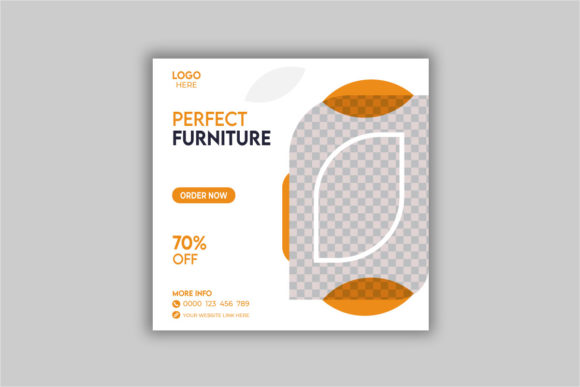
At its core, the Furniture Sale Web Banner Template is a pre-designed layout optimized for digital display, specifically sized at 1280×720 pixels. This resolution is critical because it aligns with standard HD video formats and wide-screen desktop displays, ensuring your promotion looks crisp on monitors, tablets, and smart TVs. The template operates at 300 DPI in RGB Color, providing a balance between high-resolution print readiness (should you need to repurpose assets) and vibrant on-screen color accuracy.
What distinguishes this template from generic drag-and-drop tools is its structural integrity. It includes a Flat Design File alongside EPS and JPEG formats. The inclusion of EPS (Encapsulated PostScript) is particularly valuable for professionals who require vector-based editing capabilities, allowing for infinite scaling without loss of quality. Meanwhile, the JPEG offers a ready-to-use raster image for quick deployments. The fact that free fonts are used ensures that there are no licensing barriers or hidden costs when customizing the text, making it accessible for freelancers and small business owners alike.
Strategic Advantages for Business Growth
Adopting a standardized template like this supports several key business goals, ranging from operational efficiency to enhanced customer experience. When you remove the variable of "starting from scratch," you reduce the time-to-market for your campaigns. This speed is essential in the furniture industry, where seasonal trends and inventory turnover rates demand agile marketing responses.
Enhancing Brand Consistency
Consistency builds trust. When a customer sees a sale banner that aligns perfectly with your website's aesthetic and previous communications, it reinforces brand recognition. The 100% customizable nature of this template means you can adjust colors, imagery, and typography to match your specific brand guidelines strictly. Instead of relying on disparate designs that may look disjointed, you create a cohesive visual language across all your digital touchpoints.
Optimizing Resource Allocation
For entrepreneurs and marketing managers, time is a finite resource. By utilizing a template where the image is not included, you retain full creative control over the photography. This forces a strategic decision: Which product images best represent the current sale? Are you highlighting a specific sofa collection or a broader room refresh? This separation of layout and content encourages thoughtful curation of your product photography, ensuring that the visuals driving the sale are of the highest quality and relevance.
Improving Communication Clarity
A cluttered banner confuses the customer. The flat design approach inherent in this template promotes cleanliness and readability. It guides the viewer's eye naturally from the headline to the offer, and finally to the call-to-action. This logical flow reduces cognitive load, making it easier for the customer to understand the offer and take the desired action. Clear communication directly correlates with higher conversion rates.
Practical Implementation and Decision-Making
To maximize the return on investment from this template, one must approach its usage with a clear plan. Randomly swapping images and text without a strategic framework often leads to mediocre results. Here is how to approach the customization process intentionally:
- Define the Objective: Before opening the file, determine the primary goal. Is it to clear old inventory, launch a new collection, or drive traffic to a specific landing page? Your objective dictates the hierarchy of information within the banner.
- Select High-Impact Imagery: Since the template does not include images, you must source high-resolution photography that complements the 1280×720 canvas. Ensure the lighting and style of the furniture photos match the tone of the sale. Avoid overcrowding the space; let the products breathe.
- Refine the Copy: Use the free fonts provided to craft concise, compelling headlines. Avoid jargon. Focus on benefits rather than just features. For example, instead of "50% Off Sofas," consider "Upgrade Your Living Room for Half the Price."
- Test Variations: Because the file is easy to edit, create multiple versions. Test different color accents or image placements to see which resonates better with your audience. This data-driven approach refines your future marketing efforts.
Risks of Unintentional Usage
While templates offer significant advantages, relying on them without context carries risks. The most common pitfall is the "cookie-cutter" effect. If a business uses the Furniture Sale Web Banner Template without customizing it deeply—perhaps leaving default colors that clash with their brand or using generic stock photos—the result can feel impersonal and low-effort. This can damage brand perception, suggesting a lack of attention to detail.
Furthermore, ignoring the technical specifications can lead to display issues. Although the template is optimized for RGB, exporting it incorrectly or stretching images to fit can degrade quality. It is crucial to respect the aspect ratio of 1280×720. Distorting furniture images makes products look unappealing and can deter potential buyers who rely on visual accuracy to make purchasing decisions.
Another risk involves misalignment with the broader campaign. A banner is rarely an isolated asset; it is part of a larger ecosystem including social media posts, email newsletters, and landing pages. If the banner's message or visual style deviates significantly from these other channels, it creates a fragmented customer experience. Strategic planning ensures that the template serves as a consistent thread tying the entire campaign together.
Long-Term Value and Operational Efficiency
Beyond immediate sales, the thoughtful use of this template contributes to long-term operational health. By establishing a repeatable workflow for creating promotional graphics, businesses build a library of assets that can be adapted for future use. The EPS and Flat Design files serve as a master archive, allowing teams to iterate on successful designs rather than reinventing the wheel for every holiday or seasonal event.
For educators and trainers in the field of digital marketing or graphic design, this template serves as an excellent case study in efficient design practices. It demonstrates how constraints (such as fixed dimensions and pre-set layouts) can actually enhance creativity by forcing practitioners to solve problems within a defined structure. It teaches the value of preparation and the importance of having the right tools ready before the creative process begins.
Making the Right Choice for Your Context
Deciding when to use a template versus commissioning a custom design is a matter of scale and urgency. For routine sales, flash promotions, and seasonal updates, the Furniture Sale Web Banner Template is the superior choice due to its speed and cost-effectiveness. It empowers small teams to produce professional-grade work without the need for extensive design resources.
However, for major brand re-launches or flagship campaigns where unique artistic expression is the primary driver, a fully custom solution might be warranted. Yet, even in those scenarios, the principles embedded in this template—clarity, proper dimensioning, and hierarchical layout—remain valid. The template acts as a benchmark for quality, reminding us that effective design is about communication first and decoration second.
In conclusion, the Furniture Sale Web Banner Template is a versatile instrument for the modern marketer. Its value is not inherent in the file itself but in the strategy applied to its customization. By understanding its features, respecting its constraints, and aligning its use with clear business goals, you can transform a simple graphic file into a powerful engine for growth. Whether you are a freelancer managing multiple clients or a business owner overseeing your own brand, approaching this tool with thoughtfulness ensures that your visual communications are always working harder for you.