Elevating Democratic Discourse Through Professional Election Social Media Banner Templates
In the contemporary landscape of political communication, the battlefield has shifted decisively from the town square to the digital feed. As campaigns vie for attention in an increasingly saturated media environment, the visual fidelity of a message often determines its reach and resonance. This is where the strategic utility of an Election Social Media Banner Template becomes indispensable. Far more than a mere aesthetic choice, these design assets represent a critical intersection of technology, marketing psychology, and civic engagement. For professionals, creators, and campaign managers, understanding how to leverage these tools is no longer optional; it is a fundamental requirement for effective modern advocacy.
The Evolution of Political Visual Identity
The trajectory of political advertising has undergone a radical transformation over the last decade. Historically, campaigns relied heavily on static billboards, television spots, and direct mail. Today, the primary conduit for voter outreach is the social media ecosystem. Platforms like Instagram, Facebook, and X (formerly Twitter) demand content that is not only informative but visually arresting within milliseconds of scrolling. This shift has necessitated a change in workflow for political operatives and freelance designers alike.
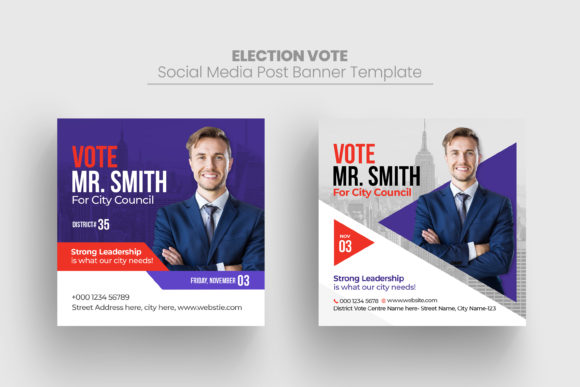
An Election Social Media Banner Template serves as the foundational block for this new era of communication. It provides a structured yet flexible framework that ensures brand consistency across diverse digital touchpoints. When a voter encounters a candidate's message, the visual presentation acts as an immediate signal of professionalism, organization, and credibility. A disjointed or amateurish visual identity can inadvertently suggest a lack of preparedness, whereas a polished, cohesive look reinforces the narrative of a capable leadership team.
Aligning with Broader Market and Creative Trends
The surge in demand for high-quality political design templates mirrors broader trends in the creative and business sectors. We are witnessing a democratization of design tools, where access to professional-grade resources allows smaller campaigns and grassroots movements to compete visually with well-funded incumbents. This trend aligns with the wider movement toward agility in business operations. Just as startups utilize scalable software solutions to punch above their weight, political entities are adopting modular design systems to maintain rapid response capabilities.
Furthermore, consumer expectations regarding digital experiences have skyrocketed. The modern audience, accustomed to the sleek interfaces of major tech companies and lifestyle brands, subconsciously applies these same standards to political content. A Political Election Social Media Post Banner Template bridges this gap by offering the clean lines, balanced typography, and optimized color profiles that users expect. By adhering to these elevated standards, campaigns respect the intelligence and aesthetic sensibilities of their constituents, fostering a deeper level of trust and engagement.
Why Professionals Are Prioritizing Editable Design Assets
The attention surrounding editable template solutions stems from a practical need for efficiency without compromising quality. In the high-pressure environment of an election cycle, time is the most scarce resource. Campaign staff and freelancers cannot afford to build every graphic from scratch. The ability to deploy a fully editable template means that breaking news, policy announcements, or event invitations can be visualized and published in minutes rather than hours.
This workflow optimization is crucial when responding to the fast-paced news cycle. Consider a scenario where a candidate needs to address a developing story or capitalize on a trending topic. With a well-organized Photoshop (PSD) template, a designer can simply swap the text, update the imagery, and adjust the color palette to match the specific tone of the message. The technical specifications, such as the standard 1080×1080 pixels resolution and 72 DPI for screen optimization, are already baked into the file structure. This allows the creative team to focus entirely on the messaging strategy rather than getting bogged down in technical setup.
Adapting to Changing Preferences and Workflows
The relevance of these templates is also driven by the changing preferences of the workforce itself. The rise of remote collaboration and distributed campaign teams requires assets that are easy to share, understand, and modify by multiple stakeholders. A template that features well-organized layers and clear naming conventions facilitates seamless collaboration between copywriters, strategists, and designers, regardless of their physical location.
Moreover, the preference for customization is paramount. No two elections are identical, and no two candidates share the exact same brand voice. A rigid, pre-made graphic often fails to capture the unique nuance of a specific campaign. However, a versatile Election Social Media Banner Template offers the perfect balance of structure and freedom. It provides the guardrails necessary for brand consistency while allowing enough flexibility to inject personality, local context, and specific policy highlights. This adaptability ensures that the visual content remains authentic to the candidate while maintaining a professional sheen.
Practical Applications and Strategic Observations
To fully grasp the impact of these tools, one must look at their practical application in real-world scenarios. Take, for instance, a local municipal race where budget constraints are tight. A freelance marketer hired to manage the candidate's social presence can utilize a Political Election Social Media Post Banner Template to create a month's worth of content in a single afternoon. By leveraging free fonts and organizing image placeholders effectively, they can produce a diverse array of posts—from "Meet the Candidate" introductions to "Voting Day Reminders"—that look as though they were produced by a large agency.
Another observation lies in the psychological impact of color and composition. Templates designed with an understanding of color theory allow campaigns to evoke specific emotions. Blue tones may convey trust and stability, while red might energize the base and signify urgency. When a template allows for easy color manipulation, strategists can A/B test different visual approaches to see which resonates most with their target demographic. This data-driven approach to design is a hallmark of modern political campaigning.
It is also worth noting the importance of mobile-first design. With the vast majority of social media consumption occurring on smartphones, the square format (1080x1080) provided by these templates is ideal. It maximizes screen real estate on mobile devices, ensuring that the candidate's face and key messaging are prominent and legible without requiring the user to zoom or scroll horizontally. This consideration for the user experience is a subtle yet powerful way to increase engagement rates.
Connecting to Larger Developments in Technology and Lifestyle
The proliferation of high-quality design templates is part of a larger development in the digital economy: the commoditization of excellence. As technology advances, the barrier to entry for producing professional content lowers. This does not diminish the value of skilled designers; rather, it elevates their role from production workers to strategic directors. They are no longer spending hours drawing boxes and aligning text; instead, they are curating narratives and directing visual strategies using robust tools like the Election Social Media Banner Template.
Furthermore, this trend reflects a lifestyle shift towards immediacy and visual literacy. The modern consumer processes information visually at an unprecedented rate. Text-heavy posts are often skipped, whereas compelling graphics stop the scroll. Campaigns that fail to adapt to this visual-centric reality risk irrelevance. By integrating professional templates into their workflow, organizations acknowledge this shift and position themselves to communicate effectively in the language of the modern voter.
The Future of Political Communication Design
Looking forward, the integration of design templates into political strategy will only deepen. As artificial intelligence and automated design tools continue to evolve, the foundational principles provided by these PSD templates will remain constant. The need for organized layers, RGB color accuracy, and scalable vector elements will persist as the bedrock of digital asset management. The Election Social Media Banner Template is not just a current solution; it is a forward-looking investment in the infrastructure of democratic communication.
For entrepreneurs and marketers operating in the political sphere, the takeaway is clear: visual consistency builds trust, and efficiency enables agility. By utilizing resources that are easy to edit and professionally structured, campaigns can ensure that their message is not only heard but seen, remembered, and acted upon. In an era where every pixel counts, the right template is the difference between blending into the background and leading the conversation.
Ultimately, the adoption of these tools signifies a maturation of the industry. It represents a collective understanding that the integrity of the democratic process is supported by the clarity and professionalism of its communication. Whether for a national headline race or a local school board election, the power of a well-designed banner lies in its ability to cut through the noise and connect human beings with the issues that matter most. As we navigate future election cycles, the synergy between strategic messaging and professional design will remain the cornerstone of successful political engagement.