Mastering Political Election Social Media Post Design for Modern Campaigns
In the contemporary landscape of political campaigning, the battlefield has shifted decisively from traditional town halls and printed flyers to the dynamic, fast-paced arena of social media. A Political Election Social Media Post is no longer just a digital flyer; it is a critical unit of communication that can define a candidate's brand, mobilize voters, and shape public perception in real-time. As attention spans shorten and visual literacy increases among the electorate, the demand for high-quality, professional, and instantly recognizable graphics has never been higher. This shift represents a fundamental change in how political messages are crafted, delivered, and consumed by adults aged 20 to 50, a demographic that serves as the backbone of modern voter turnout.
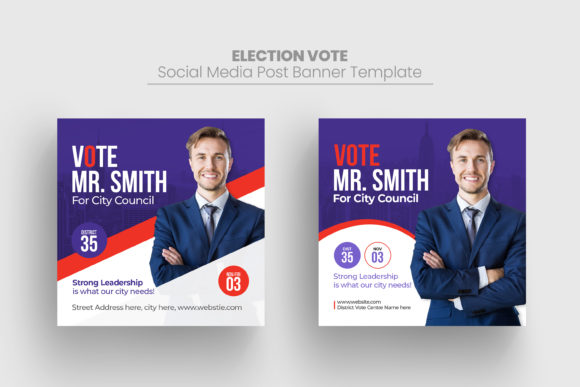
The relevance of optimized social media visuals cannot be overstated. In an era where users scroll through hundreds of images daily, a generic or poorly designed post is likely to be ignored. Effective political graphics must cut through the noise, conveying complex policy positions or emotional appeals in a fraction of a second. This necessity has driven a surge in the use of specialized design assets, such as the Political Election Social Media Post Banner Template. These tools allow campaign managers, freelance designers, and even candidates themselves to produce consistent, eye-catching content without requiring extensive graphic design expertise or prohibitive budgets.
The Evolution of Visual Communication in Politics
Historically, political advertising relied heavily on television spots and direct mail. While these mediums still hold value, their reach is often limited by cost and declining engagement rates among younger demographics. Today, the workflow of a successful campaign is deeply integrated with digital platforms like Instagram, Facebook, X (formerly Twitter), and TikTok. The expectation from the audience has evolved; voters now expect transparency, immediacy, and aesthetic coherence from the candidates they follow.
This evolution has changed the habits of both creators and consumers. Voters are more skeptical of polished, corporate-looking ads, yet they simultaneously reject low-effort, amateurish graphics. They seek authenticity wrapped in professionalism. This is where the utility of a well-structured template becomes apparent. A Political Election Social Media Post created using a professional framework ensures that the message looks credible while allowing enough flexibility to inject the unique personality of the candidate. The trend towards "clean" and "eye-catchy" designs reflects a broader market preference for clarity over clutter. Voters want to know who is running, what they stand for, and when to vote, all within a single glance.
Furthermore, the technology behind these visuals has become more accessible. You no longer need a dedicated agency to produce campaign materials. With tools like Adobe Photoshop and pre-made PSD templates, small local campaigns can compete visually with national parties. This democratization of design technology aligns with the changing needs of modern entrepreneurs and freelancers who often manage multiple aspects of a campaign, from strategy to execution.
Leveraging Professional Templates for Consistent Branding
Consistency is the cornerstone of effective branding, and this principle applies rigorously to political campaigns. When a voter sees a post, they should immediately recognize the candidate's color scheme, typography, and overall vibe. Using a Political Election Social Media Post Banner Template facilitates this consistency effortlessly. These templates are designed to be fully editable, meaning that while the layout remains stable, the specific content—text, colors, and images—can be swapped out to suit different announcements, from rally invitations to policy breakdowns.
Consider the practical implications for a campaign manager juggling multiple deadlines. Instead of designing every post from scratch, which risks visual inconsistency and consumes valuable time, they can utilize a robust template system. For instance, a standard template might feature a bold headline area, a designated space for a candidate's photo, and a clear call-to-action footer. By simply updating the text and swapping the background image, the team can generate a week's worth of content in minutes. This efficiency allows professionals to focus on strategy and engagement rather than getting bogged down in repetitive design tasks.
The technical specifications of these templates are also crucial for modern workflows. A typical high-quality template offers a size of 1080×1080 pixels, optimized for RGB color at 72 DPI. This ensures that the graphics look sharp on high-resolution smartphone screens, which is where the majority of political content is consumed. The organization of layers within the PSD file is another vital feature. A well-organized template allows users to easily toggle visibility, adjust blending modes, and modify text styles without disrupting the overall composition. This level of structural integrity is essential for maintaining professional standards across a diverse range of posts.
Practical Applications for Diverse Users
The utility of these design resources extends beyond traditional political campaigns. Educators running student government elections, non-profit organizations advocating for ballot measures, and community leaders organizing local town halls can all benefit from professional-grade templates. The barrier to entry is low; one only needs very basics of Photoshop to change the text, color, and images. This accessibility empowers a wider range of voices to participate in the democratic process with a polished presentation.
For freelancers and creative agencies, offering political design services has become a lucrative niche. By mastering the use of flexible templates, designers can offer rapid turnaround times to clients who often operate under tight election cycles. The ability to quickly adapt a template to reflect breaking news or shifting campaign narratives is a highly valued skill. Moreover, because these templates usually come with free fonts and do not include stock images (allowing the user to insert authentic photos of the candidate), the final product feels genuine and tailored.
It is important to note that while templates provide the structure, the content remains king. A beautiful banner will not save a confusing message. Therefore, the best practice involves combining a strong visual foundation with clear, concise copy. The template handles the heavy lifting of visual hierarchy, guiding the viewer's eye to the most important information, while the creator focuses on crafting a compelling narrative. This symbiotic relationship between tool and talent is what drives successful digital engagement.
Navigating Trends and User Expectations
As we look toward future election cycles, the trends surrounding political social media posts are likely to emphasize video integration and interactive elements. However, static images remain the workhorse of content strategies. They are easier to produce, load faster, and are often more shareable in certain contexts. The current trend favors minimalism—clean lines, bold typography, and high-contrast colors that pop against the white or dark backgrounds of social apps. This aesthetic choice is not merely stylistic; it is functional, ensuring readability on small screens.
User expectations have also shifted regarding authenticity. Heavily retouched or overly stylized images can sometimes backfire, creating a sense of distance between the candidate and the voter. Templates that allow for easy insertion of candid photography enable campaigns to strike a balance between professionalism and approachability. The "mockups" seen in previews often showcase how a design might look in a real-world context, but the actual files provided to users are clean slates ready for customization. This distinction is vital for users to understand: the value lies in the editable structure, not the placeholder content.
Moreover, the speed of information dissemination requires agility. When a debate happens or a policy is announced, campaigns must react within hours. Having a library of pre-designed, editable templates allows for this rapid response. A designer can take a photo from the event, drop it into the template, update the quote, and have the post live before the news cycle moves on. This capability is a game-changer for maintaining relevance and controlling the narrative.
Recommendations for Effective Implementation
To maximize the impact of a Political Election Social Media Post, creators should adhere to a few key recommendations. First, prioritize legibility. Ensure that text contrasts sharply with the background and that font sizes are large enough to be read on mobile devices without zooming. Second, maintain brand consistency. Stick to a defined palette of two or three primary colors and one or two typefaces throughout the campaign. Third, leverage the modularity of templates. Create variations for different types of content—quotes, event announcements, and statistical infographics—using the same underlying design language.
Additionally, always verify the technical requirements before starting. Ensure your software version is compatible with the PSD files and that you have the necessary fonts installed. Since images are typically not included in template packages, source high-resolution, rights-cleared photography that aligns with the campaign's tone. Authentic images of the candidate interacting with constituents often perform better than staged studio shots.
In conclusion, the role of visual design in political elections has grown from a supportive function to a central strategic pillar. The availability of professional, easy-to-edit templates like the Political Election Social Media Post Banner Template has leveled the playing field, allowing campaigns of all sizes to communicate effectively. By understanding the evolving trends, respecting user expectations, and utilizing the right tools, professionals and creators can craft messages that not only capture attention but also inspire action. In a digital world defined by fleeting glances, a well-designed post is the difference between being scrolled past and being remembered.